
Cargo types
Cells, battery packs and devices: why the category matters
Customers often describe very different products under the same word “battery”. For an international express assessment, it helps to say which of the following you are shipping. The categories below match how we list cargo on this site.
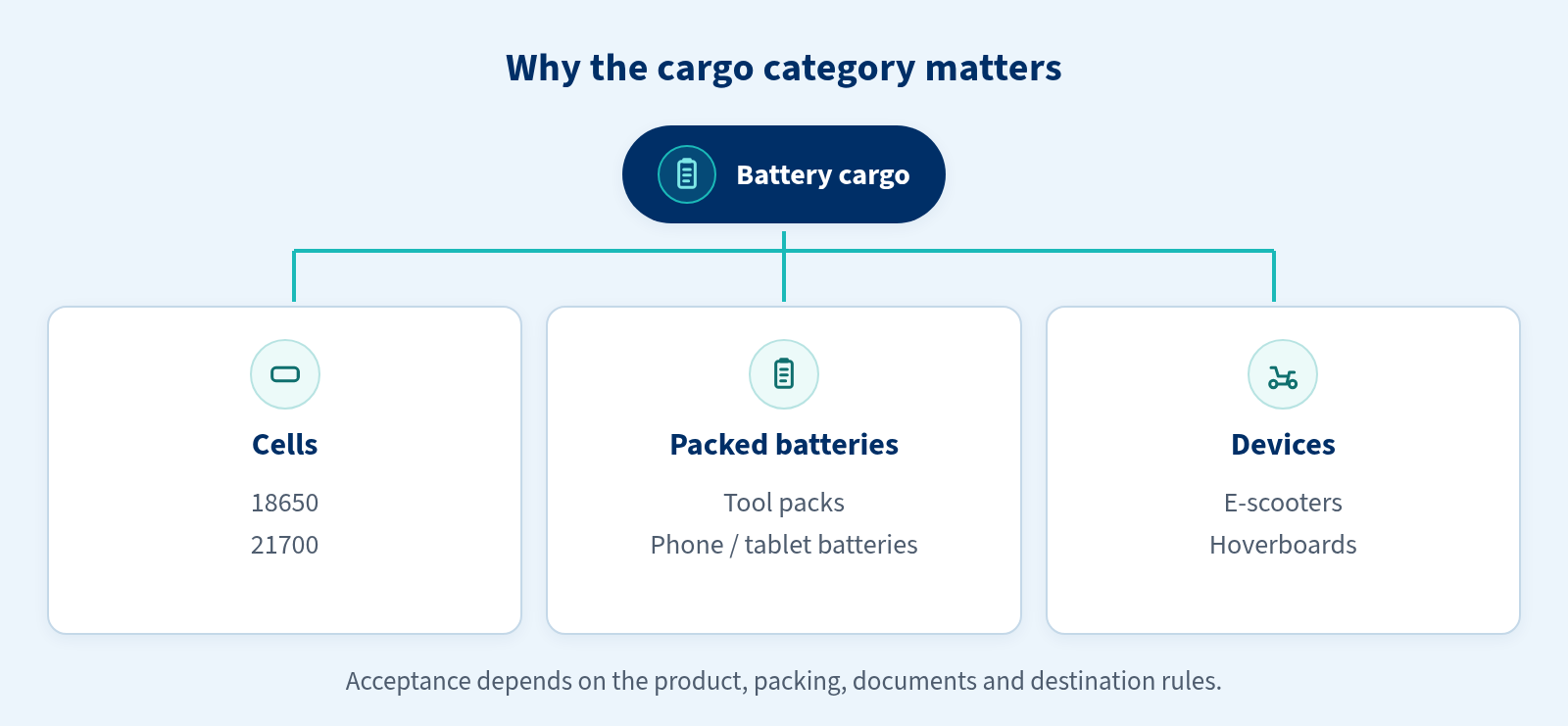
Cylindrical cells
18650 and 21700 cells are standard cylindrical lithium-ion formats. They may be offered loose or already placed in inner packaging. Because they are cells rather than a finished pack or a complete device, we need that distinction in the inquiry.
Packed batteries and tool packs
This group includes assembled battery packs — for example power-tool packs, phone or tablet replacement batteries, and similar packed lithium products — as well as conventional dry cells. A pack is not the same as a loose cell, and it is not the same as a scooter or hoverboard that contains a pack.
Devices that contain a battery
Electric scooters, hoverboards and similar personal mobility devices travel as equipment with a battery pack inside. That is a different starting point from shipping the pack or the cells on their own.
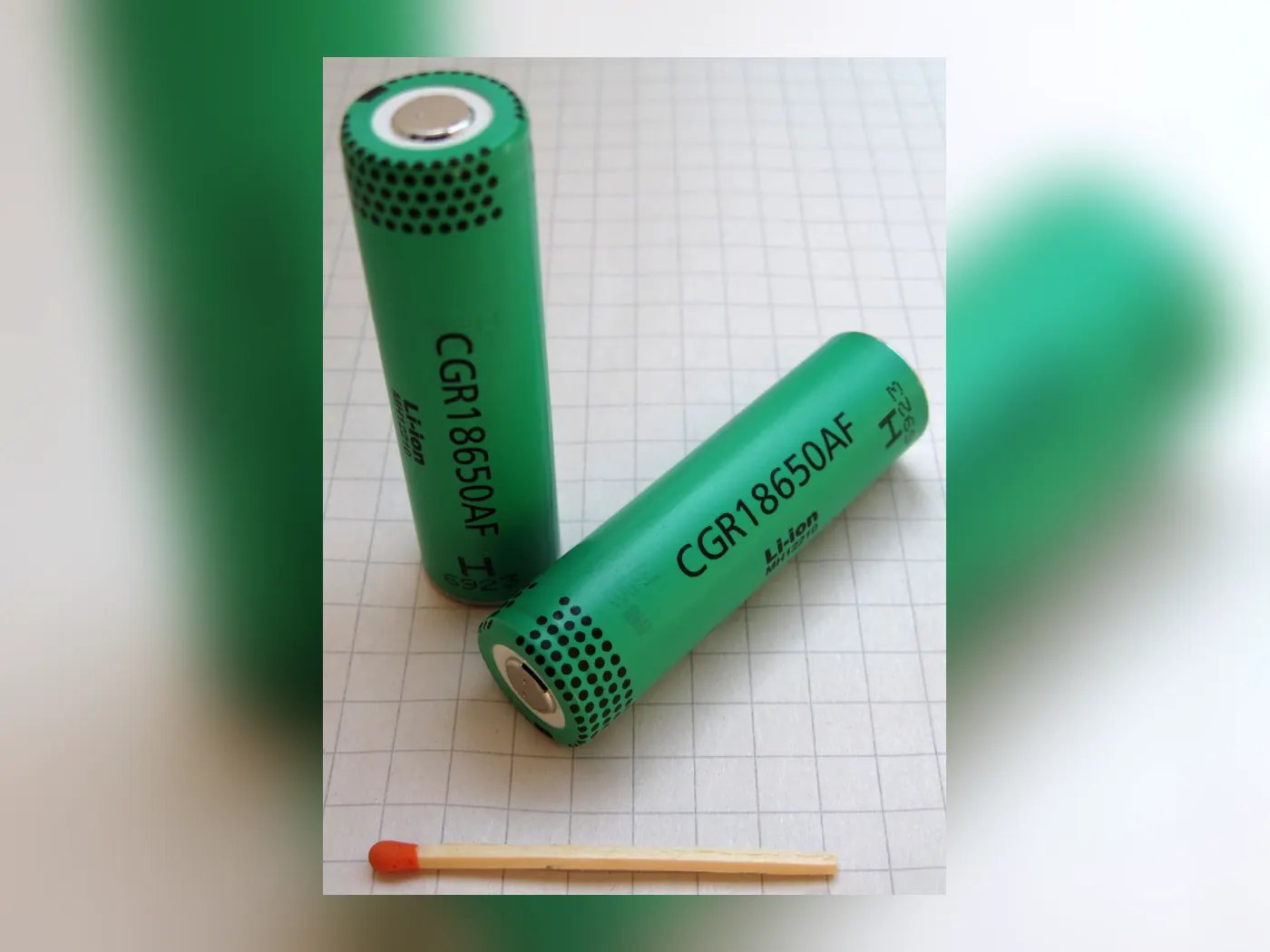
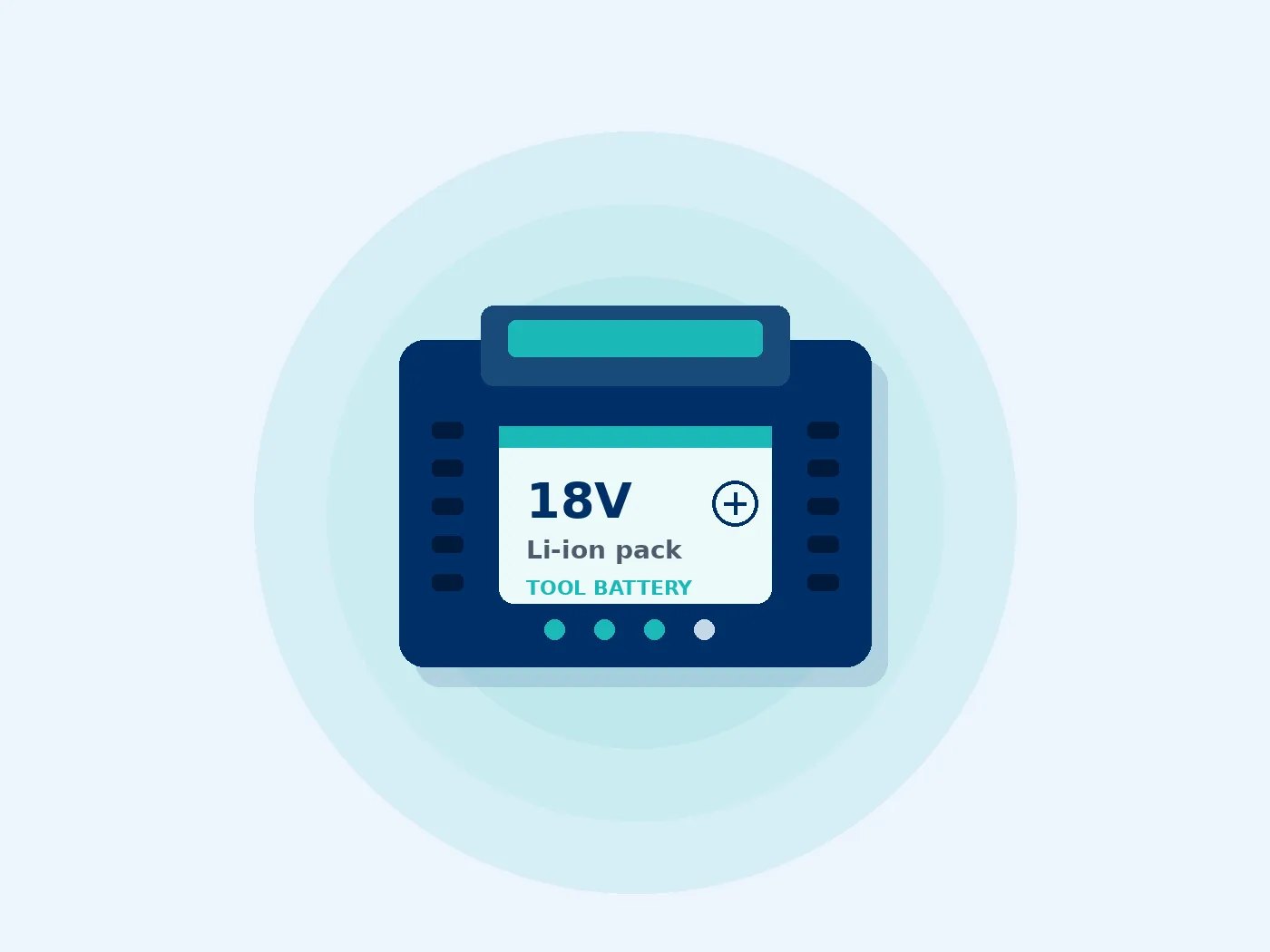
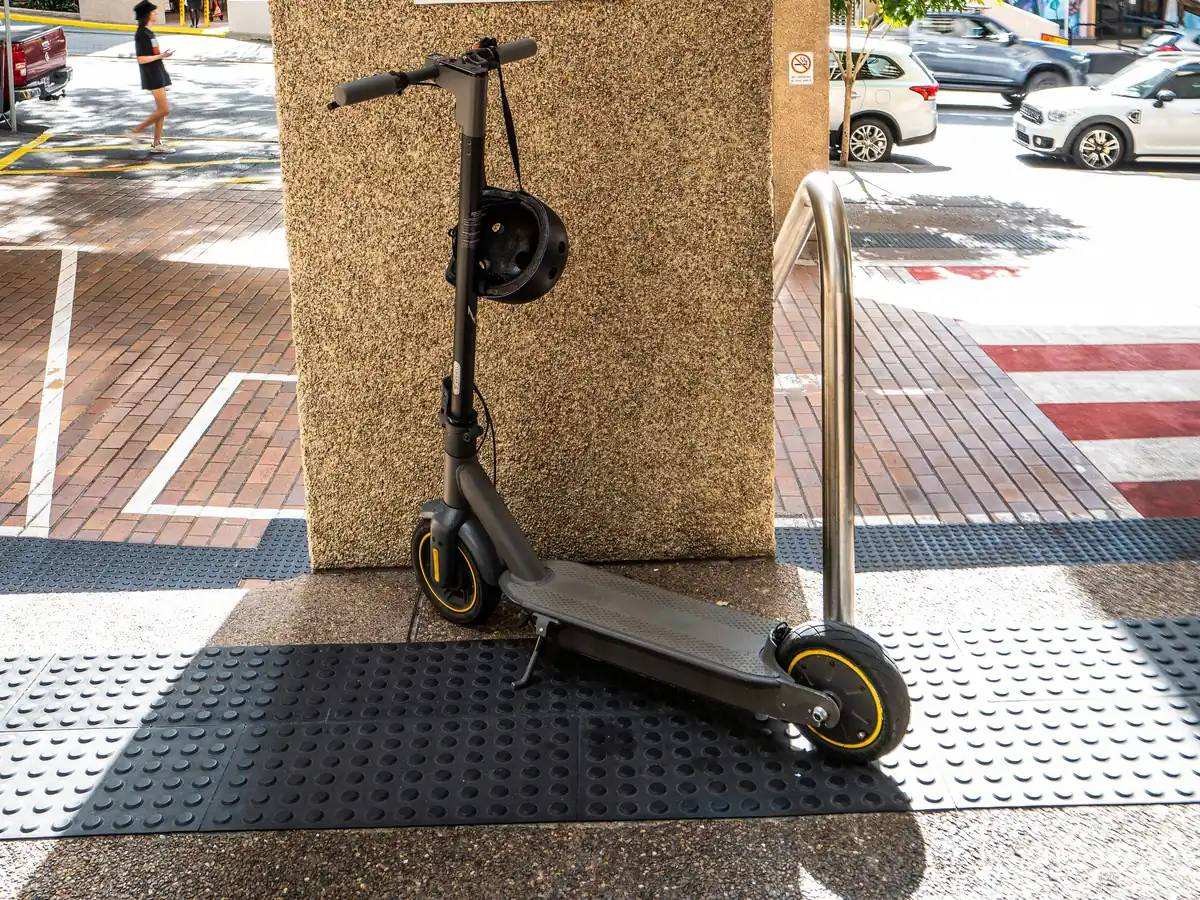
Photos: 18650 cells, Lead holder, CC BY-SA 3.0; electric scooter, John Robert McPherson, CC BY-SA 4.0; tool-pack illustration created for this site.
Why the distinction matters
Lithium batteries are dangerous goods when they move by air. Under current international air dangerous-goods rules, lithium-ion batteries shipped on their own are generally subject to tighter conditions than batteries packed with or contained in equipment. Those conditions can include limits on state of charge and, in many cases, carriage on cargo aircraft only. The exact requirements depend on the product, the packing and the current rules of the carrier and destination, and they can change.
This is a general overview, not legal advice and not a substitute for a shipment-specific check. We do not publish a live tariff here. Whether we can carry a given item, and how it would move, is confirmed in the quote — case by case, based on the product, packing, documents and destination rules.